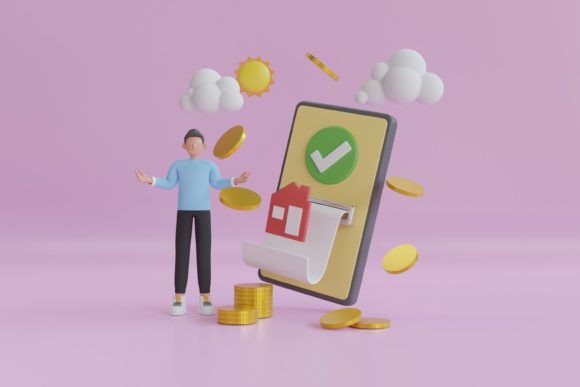
3D House Bill Payment Transaction on App
In the fast-evolving world of digital design, visuals that stand out are more important than ever. The 3D House Bill Payment Transaction on App concept brings a fresh and futuristic approach to representing financial processes in an engaging and intuitive way. Whether you're designing for marketing, branding, or UI/UX projects, this design element offers a compelling visual metaphor for digital transactions, especially those involving home-related services like utilities, rent, or mortgage payments.
What Is 3D House Bill Payment Transaction on App?
The term refers to a stylized graphic or illustration featuring a three-dimensional house icon connected to a payment process within a mobile app interface. It typically includes elements such as:
- A realistic or semi-realistic 3D house model
- Visual indicators of bill types (electricity, water, internet, etc.)
- Payment buttons, icons, or animations
- Clean, modern typography integrated into the layout
This design is often rendered in high-quality JPG or PNG formats, making it ideal for use in digital and print media. Its bold, tech-forward aesthetic communicates efficiency, security, and innovation — key attributes for any app focused on managing household expenses.
Visual Characteristics and Appeal
The 3D House Bill Payment Transaction on App design combines realism with abstraction. The 3D house adds depth and tangibility to what could otherwise be a flat or generic transaction screen. This creates a sense of trust and familiarity, which is essential when dealing with sensitive information like payments.
From a style perspective, the imagery usually features soft lighting, smooth gradients, and subtle shadows to enhance the 3D effect. The color palette tends to be muted and professional, leaning toward blues, greens, and greys — hues that evoke reliability and technology. These characteristics make the design not only visually appealing but also emotionally resonant with users who seek clarity and confidence in their financial apps.
Where This Design Works Best
This type of visual asset has a wide range of applications across both digital and print platforms. Here's where it shines the most:
Web and Mobile UI Design
For developers and designers working on finance or real estate apps, incorporating the 3D House Bill Payment Transaction on App image can help guide users through complex processes. The house symbol acts as a recognizable landmark, while the payment components clarify functionality. It’s particularly useful for onboarding screens, tutorial slides, or dashboard interfaces where user experience needs to be intuitive and reassuring.
Social Media Graphics and Banners
Marketers looking to promote budgeting tools, smart home integrations, or property management apps will find this design perfect for social media campaigns. The 3D aspect grabs attention quickly, and the thematic relevance ensures your message is clear at a glance. Use it in Facebook ads, Instagram posts, or YouTube thumbnails to highlight ease of use and digital convenience.
Editorial and Print Design
If you're creating a magazine article about home automation or digital finance solutions, this design works well as a featured image. In print materials like brochures, posters, or infographics, the 3D house can serve as a central motif that ties together data about utility savings, smart living, or financial planning.
Packaging and Brand Identity Materials
Brands that focus on smart homes or fintech solutions can integrate this design into packaging, product boxes, or branded merchandise. A logo paired with a stylized 3D house and payment elements reinforces brand identity and conveys professionalism. It's also effective for promotional items like mugs, T-shirts, or stickers aimed at tech-savvy homeowners.
How It Influences Design and Brand Perception
Choosing the right visual assets is crucial for shaping how your audience perceives your brand. The 3D House Bill Payment Transaction on App design contributes positively in several ways:
- Readability and Clarity: The structured layout helps users process information quickly, even in motion graphics or animated transitions.
- Visual Hierarchy: With a clear focal point (the house), supporting elements like payment buttons or labels naturally fall into place, guiding the viewer’s eye effectively.
- Brand Consistency: When used consistently across multiple touchpoints, it builds a cohesive visual language that strengthens brand recognition.
- Professionalism and Trust: The clean, modern look aligns with industry standards for financial and real estate sectors, reinforcing credibility.
One thing to note is that while this design is excellent for brand storytelling, it should be used sparingly in long-form text-heavy content. Its primary strength lies in visual communication rather than readability for extended reading.
Design Observations and Practical Recommendations
When using the 3D House Bill Payment Transaction on App image in your work, consider the following tips:
- Use as a Display Element: It’s best suited for headers, hero sections, or call-to-action banners rather than body copy.
- Pair with Clean Typography: Opt for sans-serif fonts like Montserrat or Lato to maintain a modern and legible contrast against the 3D visuals.
- Test in Different Sizes: Since it’s a detailed graphic, ensure it scales well from small icons to large banners without losing clarity.
- Consider Lighting and Color Harmony: Match the design's color scheme and lighting to your brand guidelines for a seamless look.
- Evaluate Licensing: Always confirm if the design is part of a commercial font or design pack, and review licensing terms before using it in paid projects.
Real-World Applications and Examples
Let’s imagine a few scenarios where this design could elevate your project:
- App Landing Page: A real estate startup uses the 3D house with a floating bill payment interface as the main visual in their landing page to immediately convey their core offering: managing home finances in one place.
- Infographic Poster: A government initiative promoting digital utility payments uses the same imagery in a poster to show how easy and secure the new platform is.
- Email Newsletter: A service provider sends out a monthly email highlighting customer savings, using the 3D house graphic to introduce each section clearly and creatively.
These examples demonstrate how the 3D House Bill Payment Transaction on App design can be adapted to different contexts without compromising its impact. Its versatility makes it a valuable addition to any designer's toolkit.
Font Pairing and Text Integration
Although the visual itself is rich and dynamic, the accompanying text must remain readable and complementary. Avoid pairing it with overly decorative or script fonts unless the overall theme supports it. Instead, go for a premium font with a strong, modern character — think Open Sans, Roboto, or Proxima Nova. These fonts provide a solid foundation that doesn't compete with the 3D house but instead enhances the overall message of reliability and innovation.
If your project requires a more artistic vibe, you might explore using a handwritten font for captions or subheadings. Just be sure to limit it to short phrases and keep the rest of the text in a neutral, sans serif typeface to maintain balance and legibility.
Final Thoughts on Choosing and Using the Design
Before downloading the 3D House Bill Payment Transaction on App design file, evaluate how it fits into your existing design assets. Ask yourself whether it aligns with your brand tone, target audience, and technical requirements. If you're unsure, create a quick mockup using the PNG or JPG version to see how it performs in context.
Also, consider the resolution and format. For web use, opt for PNG to preserve transparency and detail. For print, a high-resolution JPG may suffice depending on your layout needs. Either way, always prioritize quality to avoid pixelation or blurriness in the final output.
Ultimately, the 3D House Bill Payment Transaction on App design isn’t just another pretty picture. It’s a strategic visual tool that can simplify complex ideas, reinforce brand messaging, and connect with users on a deeper level. Used thoughtfully, it becomes a cornerstone of your creative font and visual identity strategy — helping your audience understand and engage with your content faster and more effectively.